Friday, October 15, 2010

Sonic the Hedgehog 4: Episode 1

8.0 - [Excellent]

Gameplay: 8
Visuals: 8
Music: 8
Sound: 7
Value: 6

Publisher: Sega
Developer: Sonic Team
Multiplayer: N/A
Console(s): XBLA, PSN, Wii Ware, iPhone
Reviewed on: PSN
ESRB rating: E (Comic Mischief)
BMR rating: E (No Descriptors)

Good Points:

Genesis-style gameplay returns - Great soundtrack - Sharp visuals - Challenging to collect everything - Sense of speed and pacing is to be commended

Bad Points:

Plays it very, very safe - Pushes the limit on the price/content ratio


In the wake of Mega Man 9's shocking return to the NES days of yore, I couldn't help but to wonder if the trend would catch on. What other series would launch itself into the past and craft a new game in the long-dead trail of its earliest efforts? When the name Sonic the Hedgehog 4: Episode 1 bounded onto the scene, I was joyously excited. What better choice could there be? Fans have been clamoring for a return to the Genesis games for sixteen years, and despite successful forays into two dimensions such as Sonic Advance and Sonic Rush, the speedy hedgehog hasn't quite managed to capture the feeling of those glory days. But with such an endeavor comes heavy responsibility and high expectations; after all, sixteen years is a long hiatus. Most people are ready to hold Sonic's head underwater until the timer ticks its last death note, clearly not in the mood to be receptive of Sega's mascot. But wonderfully enough, Sonic Team has done an admirable job of emulating the old formula while tweaking things enough for them to feel fresh again. It's time to slip on the red sneakers and embark on a brand new adventure!

The story in Sonic 4 is simple. In fact, it's nonexistent. The game makes an invested effort in keep all voice acting and anything resembling a plot far, far away and that works out just fine. Although Sega has claimed that the story from Sonic & Knuckles is continued here, the first episode doesn't seem too keen on fleshing it out. Rather, Sonic dashes through crazy lands with reckless abandon as he attempts to thwart the mad Dr. Eggman's evil scheme, which is more than enough context to get things going. Episode 1 includes four zones to master, each containing three stages and a boss. There's Splash Hill, a tropical world of grassy slopes and blue skies; Casino Street, a flashy casino packed with all sorts of pinball flippers and playing cards; Lost Labyrinth, a collection of ancient ruins with more traps than a jaunt through Limbo's forest; and Mad Gear Zone, a dizzying array of mechanical mechanisms and deadly doodads. Seven bonus stages (one for each Chaos Emerald) will also occupy your time. None of this is new ground for the franchise; Sonic 4 is obviously playing it safe. Nevertheless, the familiar zones ensure players that they'll feel right at home and it's hard to argue with such proven success.

Everything you remember from the old days is alive and well here. Sonic can roll into a ball and barrel through opponents with his trademarked spindash, springs will fling him through the air with a giddy sense of momentum, rings will spin and glow temptingly all over the multi-layered stages, and badniks will try as they might to knock the shiny prizes from Sonic's grasp. It all feels great, and despite the new engine and over a dozen years' time to get out of shape, Sonic 4 plays remarkably like its predecessors. The one major new addition is the homing attack, an established move of the hasty hedgehog's repertoire since the release of Sonic Adventure. Pressing the jump button while in the air will boost Sonic forward, and if an enemy or object is properly auto-targeted, send him flying towards the target, swiftly launching him back into the air after the impact. This is a surprisingly tactile addition, allowing players to chain combos together without the nuisance of hitting the ground, as well as offering some extra momentum for those tricky jumps. It doesn't make the game too easy, but instead creates an interesting aspect that keeps the flow moving in a satisfying manner. When I fired up the old Genesis games for comparison, I found myself instinctively tapping A in order to utilize this feature only to miss my objective and dilly about while I readjusted my pace. It's a small inclusion, but a noteworthy change for the better.

It's Sonic! But in HD! AND THAT'S AWESOME!

The stages are well-built and rife with alternate paths. Loops and runways are appropriately madcap and only those with quick wits will reap the benefit of the fastest routes, proving that practice and a sharp eye will go a long way to finding all the shortcuts. Like the Genesis tiles, Sonic 4 knows when to slow things down for some momentary puzzle solving and platforming. A couple of the more creative sequences have Sonic wielding a torch to light a darkened temple and matching cards to earn bonus rings and lives, gracing the game with a well-placed dose of variety and strategy. There are a few frustrating moments that force players into blind jumps or confuse them with odd geometry, but as a whole, the brief moments of precision help to create a well-rounded experience instead of a one-note speedrun. The most impacting example of this comes in the form of the bonus stages, obtained after completing a level with at least fifty rings. These levels greatly resemble the first Sonic the Hedgehog's bonus stages, except for the fact that one must now rotate the stage itself instead of simply moving Sonic around the abstract arena. Also, the visuals are less blackout-inducing. And the music is no longer terrible. And it's actually fun. The goal is to tumble Sonic through a floating maze and to a coveted Chaos Emerald, collecting enough rings to pass through toll gates and competing against the clock. These sections can become extremely challenging, especially when the dreaded end-all walls appear. With a single touch, these menaces throw the unhappy hedgehog out of the entire stage and require him to beat a level all over again for another shot at success. The final stage is especially maddening, almost to the point of cruelty. Nevertheless, this challenge is tense, delicate, and ultimately rewarding. If one manages to nab all seven of the emeralds, there's a special prize waiting to be collected. Trust me, it's well worth the effort.

But don't let the deceptively calming melody of the bonus rounds fool you: Sonic 4's soundtrack is upbeat and entertaining to listen to. The synth-heavy songs don't possess the same versatility and overall awesomeness as did the Genesis masterpieces of the '90s, but there's a contagious energy that drives the music a level far above mere competence. It's unfortunate that the style chosen causes most of the songs to sound overly similar to one another, but at least it's a good sound in the first place. Besides, the snappy drum samples and catchy tunes do a great job of keeping the classic format alive. Speaking of sounds, you'll hear all the beloved dings and boings your brain can recall from past Sonic products, including the iconic "BOIP" of jumping that is so tragically missing in some of the recent games. The visuals are bright and vivid, fully HD and prepared for this generation of fancy TVs. Sonic 4 does a good job of recalling the proper vibe of the series but doesn't try to directly recreate it (unlike Mega Man 9). Expect to see a hedgehog built up of polygons mingle with a happy mixture of parallax scrolling and 2D planes. It's a sharp-looking game that carries on the tradition of beautiful backgrounds and thrilling speed. The entire presentation feels like an authentic Sonic experience through and through, spruced up for a new age of technology. It doesn't take any risks, and does slip a few inches into the pit of genericness, but it all works out in the end.

For $15, twelve stages, four bosses, seven bonus levels, a smattering of Achievements/Trophies, and a couple of other things I don't want to spoil aren't bad. Considering that this is the first episode in a series of games, it would have been nice to have a friendlier opening price, but it's hard to complain when Sonic Team directly delivers the fondest dreams of every gamer that ever enjoyed the Genesis. A time trial mode and leaderboards make for a more complete package, giving people a reason to go back and improve their form. Beating all the levels isn't especially difficult and it certainly won't take more than a an evening or two to do so, but this is a fantastic start (or, to be technical, continuation) to what promises to be an amazing series. This first installment seems to lean on the original Sonic the Hedgehog both functionally and stylistically, so one must wonder what the next episode has in store. Will we get the chance to torment Player 2 as he desperately yells at Tails to catch up? Will half-pipes make an appearance during the bonus stages? Will Sega release lock-on technology for $10 DLC, thereby losing all the good will previously built up among the community? These unanswered questions tear at my soul in the darkest hours of the dawn. But regardless of what the future has in store, a "new old" Sonic game has finally been delivered and the unspoken words can at last come forth: Sonic the Hedgehog is back.

Thursday, October 14, 2010

A Look to the Past: Games of the Years 2001 - Super Smash Bros. Melee


2001 


Super Smash Bros. Melee (GameCube)


Sonic Adventure 2, Final Fantasy X, Grand Theft Auto III, Halo: Combat Evolved, Pikmin, Jak & Daxter, Metal Gear Solid 2: Sons of Liberty, Paper Mario, Burnout, Tony Hawk's Pro Skater 3. Are those enough big names for you? Well, all those and more came out in 2001. It looks like this whole new millennium thing is working out well. However, when it comes to the best of the best, one game stands above them all: Super Smash Bros. Melee. Not only did Melee put the original Super Smash Bros. to shame, but it became one of the greatest games of all time in the process. Back in the days when online play for consoles was an obscure novelty and the rhythm genre was dominated by DDR, there was no substitute for Melee when it came to a game-yearning group a friends. Instantly playable for newcomers and endlessly gratifying for experienced players, Melee offered a list of characters, modes, stages, and unlockables longer than Sonic 06's loading times. All of the old combatants returned from the first game, mingling with a huge cast of new characters ranging from obvious inclusions (such as Bowser and Zelda) to some pretty far-out inclusions (see Mr. Game & Watch). The stages didn't slack either and pulled memorable locales from a ton of classic series. Everything was drenched in a Nintendo nostalgia, even going so far as to include hundreds of collectable 3D trophies that cataloged the vast history of what many view as the greatest video game establishment that ever was.


A futuristic race car driver, a cape-bearing plumber, a gorilla with a tie, and a ball of pink do battle atop a giant sea turtle's back. That would make a good anime.


One of the most impressive things about Melee was the extent to which it creamed its predecessor, as if the creators pushed the Turbo button on the Mad Catz controller that is Super Smash Bros. and ran with it. The whole experience exploded in scope, upping both the graphics and gameplay to new heights never imagined. The pace was quickened and the move set enlarged, allowing for a far more versatile and deep experience. New dodging mechanics were introduced as well, and a boatload of fresh items arrived to make things even crazier. The stages became huge and dynamic, even going so far as to pit fighters against one another on top of giant, Pokemon-shaped balloons and inside a massive Game & Watch. Throwing every other fighting series' principles to the wind, Melee became an exciting game that topped its competition while barely staying in the same genre. Whether two players duked it out one-on-one without any items to get in the way or a room full of people took turns chucking bombs at each other for laughs, Super Smash Bros. refused to disappoint. In conclusion, it goes down in history as one of the greatest games to ever exist because Roy was in it. I'll never forgive Brawl.

Wednesday, October 13, 2010

GDC Online 2010! The Conclusion!

It took six hours of sitting in a car, almost sitting in the empty Ballroom A facility instead of the correct Ballroom C, and several cereal bars, but I made it to Austin and back home again without doing anything incredibly stupid and getting thrown out of GDC Online. As I mentioned in the previous post, I attended the Game Career Seminar, so I was only there for the one day. All of the talks were informative and relevant to a college student like myself, and I had a really great time. Hearing the sad end of Pandemic firsthand was fascinating and I learned a lot about networking. Turns out you're not supposed to show up at a dude's house, bang on the door, and demand a job. I've been doing it all wrong this whole time. I regret that I didn't get a chance to speak with any of the lecturers (I was so close, but the lines kept ending!), but I still got a lot of my questions answered. The exhibit halls was filled with booths about games, technology, and physics engines that I didn't understand. Again the lines thwarted me as I was forced to rush back to Ballroom C (not A) to catch the next sessions instead of dropping by the Bioware area. Lame.

My head was buzzing with information by the time it was all over and I hope to use my newfound knowledge for good and not evil. Everybody there seemed really into the whole gaming scene (imagine that at a video game conference) and I certainly got the same impression that I get from everyone who tells me stuff about the industry: it's difficult, hectic, and doesn't pay well. However, it's the passion and dedication of those involved that make it worthwhile. Will I graduate into that realm in the coming days? Only time will tell. For the time being, I'll continue to investigate the world of video games as I post reviews and other tidbits here. Oh, and one last thing: Blue Mage didn't want to come, but ended up sneaking into the exhibit hall without registering. He couldn't find Final Fantasy XIV Online, kicked over the 38 Studios booth, got arrested, and spent the remaining five hours sulking in a corner and muttering about some sort of Mario-related conspiracy. So, unlike me, he did do something stupid and got thrown out. Unfortunate, but not unforeseen.

Thursday, October 07, 2010

GDC Online 2010!

I'm a little behind on updating Blue Mage Reviews, but I have a good reason: I'll be heading out to Austin for GDC Online! I'm amazingly excited for this event, and as it's also my first video game conference, I'm hoping I don't do something incredibly stupid and get thrown out. Although it's mainly focused on the (surprise!) online aspects of gaming, it'll still have plenty to offer for people who aren't especially literate in that area (like me). I'll only be there for the Game Career Seminar on Friday, but that's more than enough to get me hyped. Here are the lectures they'll be having:

  • Show Me, Don't Tell Me: Portfolios and Resumes in the Game Industry
  • Don't Be Stopped at the Gate
  • Making Your Own Path
  • You Studied Game Design, Now What?
  • Networking With the Pros
As somebody who's trying to find out how to break into the industry, this is going to be perfect. I'm especially looking forward to hearing from Carey Chico, a former Pandemic member who worked on games such as Mercenaries and Star Wars: Battlefront (two of my favorite games from the last generation). For more information about this seminar and more, I highly recommend heading over to the GDC Online website. If you've never been to something like this, I'm willing to bet this is a good first step. I hope so, for my sake. If you have been to something like this... tell me what to do! Either way, take a look around and consider showing up! 

Also, I finally gave in and started my very own Twitter account: @StephenKelly180. Are you proud of me? Yeah, neither am I, but I'll slowly be posting more and more as the passage of time continues to ooze along, so feel free to follow/retweet/respond/harass me. Just kidding about that last one.

That's about it for this update post. See you next time!

Monday, September 27, 2010

A Look to the Past: Games of the Years 2000 - Rayman 2: The Great Escape


2000 


Rayman 2: The Great Escape (Dreamcast)


Okay, obligatory confession of not having played important games: both Chrono Cross and The Sims escaped my grasp. But that's all right, because Rayman 2 was a phenomenal game anyway! We find ourselves in  the year 2000, with a brand new millennium just waiting for some rad games to be released. When it came to the best game of 2000, I debated back and forth with myself between The Legend of Zelda: Majora's Mask and Rayman 2: The Great Escape. As you already know (if you read this year's title and even glanced at that large image above), I picked Rayman 2; and just by the slightest margins. Majora's Mask was a brilliant twist to a familiar series, but had its flaws, ultimately failing to stack up against its predecessor. Rayman 2, on the other hand, suffered from a microscopic amount of faults. It creamed the original Rayman in almost every way, hurling the limbless hero into a new world and far surpassing the genre's standards. From start to finish, Rayman 2 was a smooth platforming adventure that never hits a dry spot. The 3D platformer wasn't exactly a new concept, but this game was handled with such grace, everything felt fresh. There were two things that really stood out: the way Rayman moved and the magical yet funky setting. I have no idea what Rayman is, but he has a bunch of weird abilities. He could hover through the air by twirling his hair, swing on fairy-like Lums with his unattached hands, and throw balls of light at will. All of these maneuvers flowed one after the other effortlessly, requiring skill without ever coming to a jarring halt. There were moments of sheer frustration in Rayman 2, but rarely did they feel unwarranted or cheap. As far as platformers go, it doesn't get much better than this.


Even Rayman wants to stop and stare at the scenery.


The Glade of Dreams was a bizarre place filled with strange denizens and metallic pirates that all spoke in some kind of forgotten form of Simlish. Textures featured swirly designs and a distinct color pallete and the mystical forest was overgrown with weird plant life. There were treacherous underground lava channels, rocky bays with pirate ships docked inside, creepy nightmare lands adorned with grasping, bony hands that grabbed at Rayman at any given chance... all manner of creative places. The music style carried on the tradition of oddness with a groovy soundtrack that used tribal drums, electric guitars, tense strings, rad basses, strong pianos, and a bunch of other instruments, all combining to create a totally unique sound. The game's universe was weird and seemingly random, but the pieces fell together and make a cohesive picture that leaves one wanting more. It's so darn easy to enjoy Rayman 2, you can't help but to enjoy yourself immensely. All that and Rayman has NO ARMS OR LEGS. That's the mark of a Game of the Year.

Saturday, September 18, 2010

A Look to the Past: Games of the Years 1999 - Soulcalibur

1999 

Soulcalibur (Dreamcast)


I have to say that I'm happy to see at least one Dreamcast game make it on the list, and this is the best the gone-but-not-forgotten console had to offer. Beating its fellow Dreamcast games (Sonic Adventure) and other fighting games (Super Smash Bros.), Soulcalibur deftly snatches up this year's prize. This powerhouse was so far ahead of its time it's a wonder it didn't come packaged with a flying car. The visuals were phenomenal, sporting fine detail, fluid animation, and incredible hair and clothing effects. It was a jaw-dropping experience to simply sit back and watch the characters perform their stylish and impressive maneuvers as they leaped, spun, and sliced through the air. The fact that such a good-looking game could come out on a console in 1999 was definitely something special. The music pushed boundaries as well, for Soulcalibur's epic score got the blood pumping with extremely exciting, steel-clashing songs that begged to accompany a dynamic duel. The fighters themselves welcomed such duels with a diverse array of cool weapons and fighting styles, and they rank up there with the classics of fighting game casts. Even though Soulcalibur unleashed the abomination known as Voldo unto the world, it more than made up for it with rad characters like Maxi, Nightmare, and Astaroth. And even more admirable, it was a launch title, too. That's really, really impressive. I mean, what would you prefer to purchase for your shiny, new Dreamcast: Soulcalibur or Ready 2 Rumble Boxing?


I'm pretty sure that's not a very protective pose to strike when facing a samurai warrior.


One of the main reasons Soulcalibur was so memorable was due to its approach to the genre. While other games, such as Tekken and Virtua Figher, might have been competent and well-made in their own manner, Soulcalibur focused on crafting a flowing combat system that looked super awesome. Siegfried's elaborate swings of his sword would clash against Kilik's whirling staff as the two combatants danced through the fight with all the grace of a ninja. Although accused of being a button masher, Soulcalibur quite obviously required strategy and wits to master, and it was a heck of a lot more entertaining to watch than its competitors. Using the revolutionary eight-way run mechanic and incorporating sensible combos that weren't impossible to pull off, Soulcalibur melded form and function together to create an experience that could be entertaining right off the bat but had real legs in the long run. Never before had combat in a video game been so fun, and the entire package still holds up beautifully today. Soulcalibur set the bar ridiculously high for both the Dreamcast and fighting games in general, and taking only its sequels and the later Super Smash Bros. games out of the equation, I still hold it up as the greatest fighting game of all time. So come on now, you have say it:
SOOOOOOOOOOUUUUUUL CALIBUUUUUUUUUUUUUR!

Wednesday, September 08, 2010

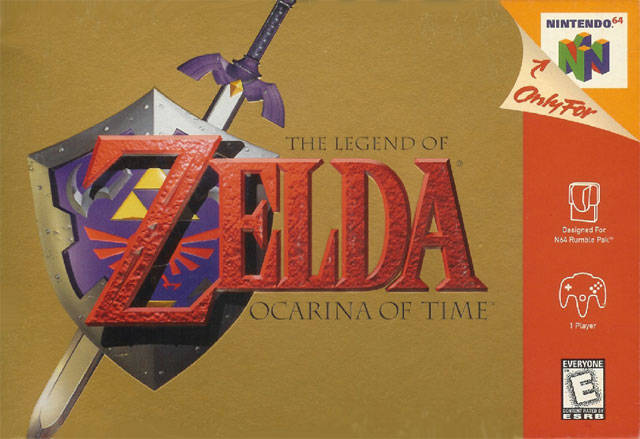
A Look to the Past: Games of the Years 1998 - The Legend of Zelda: Ocarina of Time

1998

 The Legend of Zelda: Ocarina of Time (Nintendo 64)


It's 1998, and we all know what happened in this legendary year. Of course, what else? Exxon announced a $73.7 billion deal to buy Mobil, thus creating Exxon-Mobil, the second-largest company on the planet by revenue! Other than that, I can't really think of anything. No, seriously, The Legend of Zelda: Ocarina of Time was released! A game that needs no introduction, Ocarina of Time is probably the video game community's collective Best Game Ever. From the moment the emotional title screen showed the hero Link riding across a moonlit field on his noble steed, you knew you were in for an experience that had never before been seen. Ocarina of Time acted as the Mario series' Super Mario 64. All the familiar elements that built up the Zelda franchise were there, including multi-layered dungeons, bombs and arrows, rupees inexplicably hiding inside tufts of grass, and all that stuff. By using the mega-awesome power of the Nintendo 64, however, Hyrule was utterly transformed into an eye-opening world of 3D wonder. Using the Z-targeting system, combat was also changed for the better, granting Link a rigorous set of fighting techniques. Dungeons, of course, took on a new atmospheric life with complex and brilliant designs that took advantage of Link's new dimension. Indeed, this installment of The Legend of Zelda made everything new again and had enough fresh ideas to reboot a series several times over. 


I was going to make a Navi joke, but I'm really sick of those. Instead, I'm just going to say that this game is RAD.


Ocarina of Time was all about exploring; exploring, adventure, and all the elements that make a great fantasy quest so great. The tale of the three goddesses of the Triforce, the evil king Ganondorf, and the shocking time-traveling plot twist will always be remembered, and the epic scope of Ocarina of Time ensured this fact. Hyrule came to life with its incredible 3D setting, allowing the player to truly experience the world through Link's eyes. You, the player, could scale the fiery Death Mountain itself, leap from the sparkling waterfall of Zora's Domain, explore the puzzling Lost Woods, and gallop across the vast plains of Hyrule field. It all felt magically real and is quite honestly one of the most amazing experiences in video game history. It didn't hurt that the game looked excellent, and sounded just as good. The soundtrack ranged from happy shop ditties to haunting ocarina songs, leading you through each location and story sequence with the proper tone. Some genius at Nintendo HQ even had the idea to let the player use an ocarina to play songs and affect the world in highly interesting ways, thereby granting the game its very name. This revolutionary and important game was a quality product from start to finish, and it's hard to forget the battles, journeys, and characters encountered along the way. There's no denying it: whether you compare it to any other game from 1998, be it Banjo-Kazooie, Pokemon, or StarCraft, there's no topping Ocarina of Time.

Saturday, September 04, 2010

A Look to the Past: Games of the Years 1997 - Star Fox 64

1997

Star Fox 64 (Nintendo 64)


After the radness of '96, this year slowed down a little. At least... for me it did. Once again I have a Final Fantasy disclaimer: I've never played Final Fantasy VII. There, I said it. Now we can continue. Fallout premiered this year, as did GoldenEye 007, neither of which I have played. Castlevania: Symphony of the Night and and Grand Theft Auto were also released, but I didn't play those either. Of course, Diablo and Grand Turismo were features in '97, but they're just out of my wheelhouse too. Okay, 1997 isn't my strong suit, but I still happily give Game of the Year to Star Fox 64. The heroic Fox McCloud and his loyal team of fellow mutant animals are the stars of this fantastic sci-fi shooter, and it's a wild ride, let me tell you. I have a number of complaints regarding the illogical Nintendo 64 controller, but I'll always remember it for Star Fox 64. Not only did the oddly-shaped controller look a bit like an Arwing, but firing at swarms of enemy ships with the bright blue A button and tapping Z repeatedly to do a barrel roll felt perfect. And who can forget the epic Rumble Pak, which simultaneously made the game feel more engaging and the controller feel like a cinder-block with handles. Even so, Star Fox 64 played extremely well and looked just as good. The intensity of huge space battles full of laser beams and explosions was exciting to experience, and was pretty darn awesome for the time too. Shiny reflections on the smooth surface of an ocean and a monstrous, insane lava monsters made an impression on me, and I still enjoy marveling at the game's visuals even now.


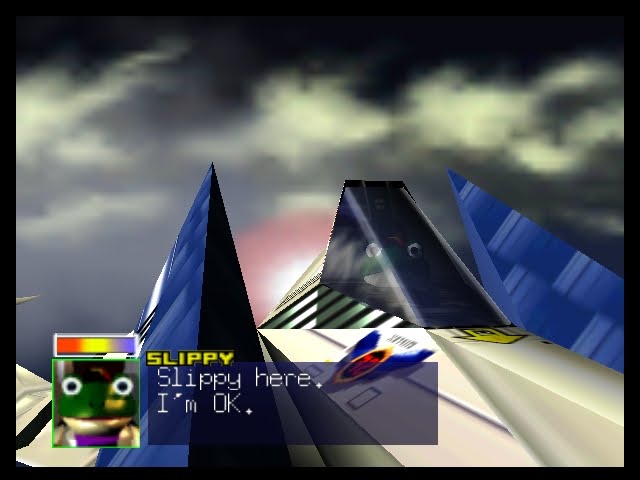
News flash: Slippy is OK. Just don't expect it to last.


The sound design was even more memorable than the graphics, however, as it boasted some classic, bombastic songs and a heaping serving of memorable voice acting. Koji Kondo once against delivered with an unforgettable score that highlighted the action scenes, set the mood for creepy encounters, and made everybody feel great when a successful mission came to a close. As for the voice acting... well, Star Fox 64 is quite literally the most quotable video game (or any form of media, for that matter) on earth. I could go on minute upon minute spouting the game's script, and the characters were made lovable because of the earnest performance by all the voice actors. It was goofy, no doubt, but that was the best part. All of these good memories put together made for an amazing game, and is an experience that the Star Fox series has failed to fully capture ever since. With the announcement of Star Fox 64 for the 3DS, it looks like we'll get to take another spin through Lylat; but when will a brand new Star Fox game finally arise? The resurrection of Donkey Kong, Kid Icarus, and other Nintendo icons is a good sign, but I won't be satisfied until the controller is in my hand and Peppy is yelling instructions that I already know.

Friday, August 27, 2010

The Misadventures of P.B. Winterbottom

7.0 - [Great]

Gameplay: 7
Visuals: 7
Music: 7
Sound: 6
Value: 6

Publisher: 2K Play (XBLA), Valve (Windows)
Developer: The Odd Gentleman
Multiplayer: N/A
Console(s): XBLA, PC
Reviewed on: PC
ESRB rating: E (Comic Mischief)
BMR rating: E (Copious Pies)

Good points:

Dapper presentation - Humorous script with a magnificent vocabulary - Puzzling puzzles - Captivating clone system

Not so good points:

Obtuse concepts can hamper the learning curve - Some puzzles are too chaotic and difficult for their or good - Short experience


P.B. Winterbottom is no ordinary thief. Jewels and gems do not tempt him, nor does gold and money. No, this devious gentleman is interested in only one thing: delicious pie. As persistent as he is portly, Winterbottom will stop at nothing to achieve his pastry-based escapades, yet everything changes when he breaks the rifts of time and encounters a giant, magical, somewhat creepy-looking blueberry pie. This is the basic premise of The Misadventures of P.B. Winterbottom and its odd presentation is as integral as the head-scratching puzzles it offers. Set in an 1800s-inspired world of strangeness, the game plays out like a silent film, so you can expect a complete lack of any dialogue and a black-and-white color pallete. The humorous narration text is the scoop of ice cream on the pie as it seems to have an endless stream of quaint, charming, and sometimes downright insulting tips for the player. I'll try my best to avoid mimicking its infectious, old-timey speaking style as I write this review. Crumbs! Well, that didn't last long.

Even without the imaginative frills, P.B. Winterbottom has a lot of really good ideas. It's almost impossible to talk about the game without mentioning a similar product, from the artistic indie style to the time-manipulating, puzzle-based gameplay: Braid. If you've played the stellar indie game before, you'll have a better understanding of how P.B. Winterbottom works. However, the folks at The Old Gentlemen took their project in a decidedly different direction. With the goal of grabbing as many pies as humanly possible in a given level, you'll soon learn how to record Winterbottom's actions as you hop to and fro along the 2D plane. Playing back your recording will spawn a clone of the gluttonous burglar, allowing you to interact with it however you wish. You might want to stand on its head in order to reach a ledge, or perhaps you need it to hold down a switch for you so you can pass through a gate. Whatever you choose, the clone will keep looping its course until you delete it, either by making a new one or simply growing tired of the lazy bum and blotting it out of existence for the spite of it. This is the backbone of P.B. Winterbottom's gameplay, each world adding new twists to the basic formula. Sometimes you'll have to grab pies in a certain order, some pies only clones can obtain, time restraints will keep you on your toes, and evil clones will harm you if you aren't careful. There's a wide breadth of subtle alterations that change the entire experience, and you'll rarely be doing the same thing for long.


They might be cooperating for now, but just wait until it comes time to share the pie...


The varied puzzles take a delicate mix of dexterity and mind-power, forcing the player to think ahead and then successfully complete the required steps to nab every last crumb of dessert. It's a tricky business trying to arrange all the clones to time the current scheme just right, but finally solving a seemingly impossible task is satisfying to the utmost degree. However, the game can get a little too tricky in this area, occasionally venturing into frustrating territory. Perhaps I'm just a little slow at it, but some of the earlier concepts were difficult to grasp, which made things a bit less intuitive than felt proper. It didn't help that mistakes forced me to wait on a long clone animation or, worse yet, set up my plan all over again after accidentally deleting an important clone. These problems gradually dissipated until they were gone for good, replaced with fun and merriment, eventually leading to a great final boss that ended with a bang. Nevertheless, whether it's the learning curve or an annoyance that one learns to deal with, it certainly hampered my enjoyment for a good while. As a final frown upon P.B. Winterbottom, my journey of pie lasted only three hours, including my extended periods of staring at the screen and feeling like a full-blown idiot. A host of challenging bonus stages will keep competitive spirits going at each other on the leaderboards, and the game simply begs for a speed-run or two, but the story mode is fleeting.

Yet the time you do spend in this oddball world, however brief, is a pleasure to both the eyes and ears. From the pseudo-3D character models to the wonderfully crafted backdrops, P.B. Winterbottom stays true to its theme from start to finish. Illustrated cutscenes unfold the goofy yet captivating story and the screen has just enough of an old film grain to be effective but not annoying. Pianos and strings set the mood of a silent movie with a perky yet oddly ominous score, greatly adding to the overall effect and making the game fun to listen to. There aren't many sound effects to speak of, which makes sense considering the whole "silent" part of "silent film", so it ends up helping the premise. Yes, art is alive and well in P.B. Winterbottom, and it's obvious the creators put time and thought into its presentation.


Times like these make me wonder if the narrator just makes up words on the spot.


If you've played and enjoyed time-and-space-bending puzzle games like Braid and Portal, this misadventure is probably right up your alley. Although it doesn't nearly reach their caliber of greatness, P.B. Winterbottom has its own story to tell and quandaries to pose, making a unique name for itself with the fantastic setting and lots of funny, little clones. Even with its frustrations and brevity, it's hard to turn down such a thought-provoking and charming adventure. Considering the current price point of $5 (or 800 Microsoft Points for the XBLA version of the game), it's really a no-brainer: The Misadventures of P.B. Winterbottom is fun waiting to be had.

Saturday, August 21, 2010

A Look to the Past: Games of the Years 1996 - Super Mario 64

1996  

Super Mario 64 (Nintendo 64)


1996 was a big year for games. Sega released its killer app for the Saturn, NiGHTS Into Dreams; Sony unleashed its platforming hero Crash Bandicoot onto the gaming scene; Capcom virtually invented the horror genre with Resident Evil; the world became addicted to Pokemon Red and Blue; Eidos started the long-running Tomb Raider series starring the famous Lara Croft; and to top it all off, 3D was starting to become commonplace. But even against such a wave of intimidating titles (if you count Crash Bandicoot as intimidating), Nintendo was ready to win the prize with Super Mario 64. A classic among classics, the game gave 3D new meaning. After more or less inventing the 2D platoformer with Super Mario Bros., Super Mario 64's lasting design made the realm of 3D platoformers what they are today. Running and leaping through vivid lands as Mario was exhilarating and magical, and definitely proved what the Nintendo 64 was capable of. The madcap obstacle course sensibilities from the past games remained intact, but that handy third dimension did wonders to spice things up. Huge, open levels practically begged to be explored, and the mysterious castle still stands as one of the greatest game HUBs of all time. Looking back on the controls today certainly proves that video games have matured, but considering this was Nintendo's first legitimate foray into 3D, it's amazing to consider how spot on they had it.


So very many ways to die.


Whistleable tunes that cause even the most hardened gamer to choke up with nostalgia added to the ecstasy that was Super Mario 64, and Charles Martinet lent his voice to the perky plumber for the first time, immortalizing Mario's personality into the hearts of players. The sound design fit the tone of the game, which was literally constructed from 100% recyclable fun. Whether you were swimming in the deep, relaxing waters of Dire, Dire Docks or sliding joyously down the ice cave's penguin race in Cool, Cool Mountain, Mario 64 managed to cast a spell of everything a video game should be. It was challenging, innovative, colorful, and just plain entertaining. I can sometimes be heard complaining that video games these days fail to capture the magic of the classics; to understand what I'm talking about, spend some time playing Super Mario 64.

Wednesday, August 18, 2010

A Look to the Past: Games of the Years 1995 - Super Mario World 2: Yoshi's Island

1995 

Super Mario World 2: Yoshi's Island


The sequel for the lauded and wholly awesome Super Mario World took a drastic turn in a bold new direction. In Super Mario World 2, Mario was-- get this-- a baby. Not only that, but you couldn't even control the de-moustached plumber; you instead took full and constant control over the lovable Yoshis, charged with the protection of the infant Mario. Being the selfless dinosaurs that they are, the Yoshis didn't care about getting killed themselves so much as keeping Mario safe. Taking a hit would send the howling infant into the air via a floating bubble, which provided for a number of tense moments that has the player scrambling about in a frenzy trying to reclaim his lost prize. Adding to the drama was a stricter time limit, encouraging players to collect as many clock-prolonging stars as possible. There were a lot of unique ideas at play here, including wacky transformations (more or less a Yoshi version of Mario's suits), swallowing enemies for use as egg-based projectile weapons, and my personal favorite: Super Baby Mario. This magical power-up allowed the tiny, helpless baby to don a cape and dash through the level at extremely high speeds, all the while being perfectly invulnerable! That's very rad.


I think Yoshi is oblivious to how pretty his surroundings are.


Just as striking as the gameplay changes were the visuals: Yoshi's Island was probably the most artistic and beautiful game of its time. A crayon-inspired style colored the fun and imaginative world in which there be Yoshis. Thick outlines and a pallete of pastel paints gave life to this wonderful-looking game, making everything a pleasure to look at. Pseudo-3D elements and excellent animation mingled with the inspired design to cheer-worthy effects. Using a clever music box song for its theme, the tunes of Yoshi's Island were tear-provokingly lovely, happily jaunty, and ultra rocking, proving once again how crazy-brilliant Koji Kondo is. Despite its vivid look and inventive gameplay, Yoshi's Island ultimately failed to match its near-perfect predecessor, but that really says more about the top-tier quality of Super Mario World than any weakness of this game. It's a worthy winner of 1995's awards, even against other excellent platformers like Donkey Kong Country 2 and Ristar. Granted, I never played Kirby's Super Star Saga or Chrono Trigger, so don't start yelling at me concerning their respective awesomeness. Yoshi's Island is a joy to watch in motion and to play, and serves as a testament to the consistently amazing games Nintendo puts out.

Tuesday, August 10, 2010

A Look to the Past: Games of the Years 1994 - Donkey Kong Country

1994 

Donkey Kong Country (SNES)


It really is a shame that Rare no longer has control over the Donkey Kong license. Nowadays the once-memorable gorilla spends his hours starring in bad kart racers and getting cameos in good kart racers; but back in 1994, he was king of the jungle.  Lots and lots of barrels, bananas and... my alliteration has failed me, so lets go with mine carts. Lots of barrels, bananas and mine carts inhabited the well-designed levels of Donkey Kong Country, and it brought a new take to the platformer world with good looks to spare. "An Incredible 3-D Adventure in The Kingdom of Kong!" proudly advertised the box art; and it wasn't far off from the mark. While still sprite-based, the game did use pre-rendered 3D graphics, which alone amounts to a certain legacy. Luckily the gameplay was also ridiculously refined, so you have only yourself to blame if you lose every one of your red life balloons (unless, of course, an underwater level did you in; that's understandable).


A gorilla riding a rhinoceros charging a beaver! It's a real jungle out there! 


I know I tend to promote music a lot, but this time I really, really mean it: Donkey Kong Country's music was uber-fantastic, or I'm a monkey's uncle! Oh, wordplay... the two of us get along well. Some songs even feature samples of monkey noises for percussion! Extremely good stuff. Even with the established and popular Mario and Sonic out there, Donkey Kong proved that he can make his own room in a crowded genre of heavy-hitters. And it's not only the platformers that DK bested; major contenders such as Warcraft: Orcs and Humans and Final Fantasy VI were forced to give way. And yes, I'm sorry Final Fantasy fans; whether or not you debate this to the grave, I'm not giving up my monkeys. Not even for an army of moogles. Ah yes, if only Donkey Kong could climb out of the empty banana hoard of despair and climb the palm tree of success once more...

Hm? What's that...?

Wait... what?

Retro Studios is making WHAT?


Wednesday, July 14, 2010

A Look to the Past: Games of the Years 1993 - Myst

1993 

Myst (PC)


Perhaps the most original winner from the entire list, Myst did what no game had done before. While hit games like Mega Man 6, Link's Awakening and Sonic CD kept rolling out, Myst took a brave move; and it paid off big time. It presented an imaginative world steeped in mystifying mystery and riddled with riddles, creating an unforgettable atmosphere in the process. The story was dark and intriguing, forcing player to takes things very slowly in order to progress. Reading tarnished books with hidden meanings lurking between pages, exploring abandoned worlds locked with complicated puzzles, and deciphering strange mechanisms and buildings were commonplace activities. There was no fighting, no dying, and next to no direction. Instead, the player was given a first-person perspective from an unknown individual and merely dropped-- quite literally-- into the Island of Myst. Clicking on the still frames of rendered scenery and interacting with its objects was more than enough to draw in millions of people.


Do you know how long it took me to figure out the puzzle of the lighthouse? A long time, that's how long!


Visually, Myst was a masterpiece. An archaic masterpiece by today's standards, but a masterpiece all the same. Like all the other elements of the game, it managed to forgo conventions and create a thick atmosphere of surreal creepiness. It really feels like another world in there. The game even used live-action cutscenes to non-laughable effects, which was and still is a wonder. Perhaps the most important achievement of all was that Myst truly proved that video games aren't just for kids, and did so in a truer sense of the word "mature" than did shock factor games like Mortal Kombat and Doom. Difficult, obtuse, and at times confusing, Myst was not an easy game to complete. But the challenge was entirely different than that of its fellow video games, and very few games even today can match its vision. It was certainly ahead of its time in 1993, and its gripping tale is still well worth a look.

Tuesday, July 13, 2010

A Look to the Past: Games of the Years 1992 - The Legend of Zelda: A Link to the Past

1992 

The Legend of Zelda: A Link to the Past (SNES)


I was already moving onto 1993 after quickly deciding on '92's Game of the Year; namely, Sonic the Hedgehog 2! However, I was astounded and flabbergasted to discover that I had overlooked one of the most remarkable games of our lifetimes: The Legend of Zelda: A Link to the Past. As hard as it is for me to let one of my favorite platformers of all time slide to the wayside, I couldn't overlook the significance of such an important achievement. In a world of fun albeit simple games such as Super Mario Kart and The Lost Vikings, this landmark installment to the Zelda series was epic in the true sense of the word. The tale began during a raging storm, leading the young hero out from his safe house and into a grand, imposing castle. One endangered princess and several puzzles later, the entirety of Hyrule was at the player's fingertips. The overworld was huge, chock full of battle, secrets, monsters, magic, and a whole lot more. Exploration mixed with real-time combat to create an excellent recipe for adventure, and in 1993, that was pretty much the coolest thing currently on the planet. The dungeons were top-notch too, of course: your brain was as necessary as your wits to make it through in one piece.


Beware the cuccos: they are not your friends.


Easily besting the series' previous two installments, A Link to the Past perfected the formula and brought a slew of classic Zelda trademarks to the table. This game introduced the Master sword to the franchise, along with the hookshot, a bevy of amazing songs, and other such staples. It was also the first game in the series to legitimately hold up to today's games (at least in my opinion), and could certainly be well-received even now after a few touch-ups here and there. It's clear that A Link to the Past made a name for itself with its many innovations and super high quality and has subsequently gone down in video game history as one of the finest. You can be sure that we haven't seen the last of this remarkable series in this Look to the Past, for the future holds installments of even greater power!

Saturday, June 26, 2010

A Look to the Past: Games of the Years 1991: Super Mario World

1991

Super Mario World (SNES)


To say that Super Mario World was the best game of 1991 is no light statement. Sega was right behind with the release of Sonic the Hedgehog, Mario's only true rival, and the epic Final Fantasy IV was right in there too.  However, if ever a perfect platformer were to exist, Super Mario World would be it. A big, colorful world comprised of locations named after various foodstuffs awaits the player, throwing wonderfully-designed level after level at him every step of the way. Vanilla Dome hid within its caverns more giant, angry moles than you could ever hope for, as if taunting Mario to venture their twisting pathways. Butter Bridge boldly tested the player's wits, but a magic cape will drastically reduce the probability of plummeting plumbers. The Forest of Illusion is confusing and mystifying, but its hidden secrets keep even the most hopeless adventurers coming back for more. Needless to say, Super Mario World is a huge game.  Hours and hours can be poured into this game, and if you can finally unlock all the devious secrets, you can do it all over again to find it as fun as ever.


The music playing here is so groovy it's almost painful.


The fact that you can do all this on a dinosaur named Yoshi makes it even better. Yoshi, of course, debuted in Super Mario World, adding lovable drum beats to all the already amazing songs! I'm not sure if it's possible to get tired of this game's music. It's as classic as the game! But the true crowning achievement, and why Super Mario World snagged this award in the first place, is the gameplay. Of course almost every game, in the end, depends on its gameplay; but Super Mario World thrives upon it. The gameplay is without a doubt what every 2D platformer aspires to reach even today. In fact, I'm pretty sure that even some of the 3D ones do too. Forget 1991; Super Mario World is up there for Game of the Ever!

Saturday, June 19, 2010

A Look to the Past: Games of the Years 1990: Super Mario Bros. 3


To me, 2010 sounds like the future itself; and with games as advanced as Heavy Rain and Mass Effect 2 coming out these days, that just might be true. I found myself wondering what would be 2010's Game of the Year (for me and the collective opinions of millions of gamers) and if it would be as revolutionary as it rightfully should be. It's also fascinating to realize that taking away twenty years brings us back to the year 1990 and directly in between the release of the Genesis and the SNES, which in turn highlights the incredible progress games have made; not only in terms of tech specs, but in every area imaginable. With all that in mind, I thought it would be interesting to take a look back at the past twenty years and award each of them with a Game of the Year winner-- a kind of hall of fame if you will. I'll be adding on one game every week until we reach the end, so keep checking back for new entries. Naturally I can't have played every game that came out in the last twenty years, but I've played enough to make a rather informed opinion. Therefore, that is what I shall do. (Make an informed opinion, not play every game that came out in the last twenty years.)


1990

Super Mario Bros. 3 (NES)


A fitting start for this monumental list, Super Mario Bros. 3 was one heck of an entry to the Mario series. A lot of fellow players would no doubt agree with me, as it's one of the best-selling games of all time, and is no stranger to praise. Back in the simple days of gaming, Super Mario Bros. 3 brought together everything good about the previous Mario games and made those things even better. It was the first Mario game to use an overworld for choosing levels, which is used even now by games like New Super Mario Bros. and Super Mario Galaxy. The signature Mario oddness was present as well, allowing Mario to hop around in a giant boot known as Kuribo's Shoe. That's weird.


When surrounded by turtles suspended by floating clouds and blocks, one should always wear a raccoon suit. Everybody knows that.


In my mind, Super Mario Bros. 3 was the first game in the series to really nail the perfect control that all platformers strive for, and that alone is strong reason for Game of the Year status. Even the ground-breaking Final Fantasy was bested by this excellent title, for Super Mario Bros. 3 had very few flaws and was jam-packed with fun. Let's hope that the video game community continues to use this game as inspiration, hearkening back to a time when flying plumbers were more popular than bald anti-heroes with guns.

Saturday, May 22, 2010

Portal


8.5 - [Excellent]

Gameplay: 10
Visuals: 8
Music: 7
Sound: 8
Value: 5

Publisher: Valve Corporation
Developer: Valve Corporation
Multiplayer: N/A
Console(s): PC, XBLA
Reviewed on: PC
ESRB rating: Blood, Mild Violence
BMR rating: Blood, Mild Violence

Good points:

Mind-blowing portal system - Fantastic puzzles - Causes players to think in new ways- Humorous and well-told story - Convincing atmosphere - GLaDOS - Portals are super cool!

Not so good points:

Heart-shatteringly short


It's very rare that an entire game can be carried by a single concept; a concept that, at first glance, appears to be akin to a gimmick. However, the aptly-named Portal has such a brilliant mechanic going for it, you'll be thoroughly entertained from start to finish, even if the end does approach all too soon. It's not just the portal system that keeps things interesting, though: ridiculously clever level design, an interesting story, and hilarious writing sets Portal apart from the crowd. In fact, there's never been anything like Portal before.

After the stage is set, putting you in control of a nameless subject in a sterile company's testing center, you soon gain control of the Aperture Science Handheld Portal Device (or, if you don't feel like wasting your breath, the portal gun). The smooth, polite, disembodied voice of GLaDOS will guide you through your exercises, which is where most of the game's wonderfully dark humor comes from. Without spoiling too much, the story more or less feels like a slow descent into madness as you uncover terrible truths and wander the giant Aperture Science complex looking for cake. The atmosphere is foreboding as it provides a strange mixture of state-of-the art technology with total abandonment... except for GLaDOS. She is always watching.

Luckily, as previously mentioned, you have your portal gun to help you out. You can fire either a blue portal or an orange portal, but can only have one of each active at once. Portals can stick to most flat surfaces and are just large enough for you to hop through. The really crazy this is that they act as doorways to each other: walking into one will lead you out the other. For example, if you fire your orange portal to a place you can't currently reach, and then fire your blue portal at a nearby wall, you can walk right through the blue one and come out through the orange one, transporting you right up to that unobtainable spot. It works both ways, of course, so you could walk right back through the orange one and end up back on the ground. This simple technique allows for infinite player creativity, and forces you to think in entirely new ways.


If a picture if worth a thousand words, why am I even bothering to write this blog?


Finding new, inventive ways to use the portals is half the fun. You can use your forward momentum to send yourself flying through one portal and out the other; you can fire portals around the room, using them as portable portholes to get a better view of a dangerous situation; you can trap a deadly turret in a perpetual free-fall between two open portals. Anything you can think up (as long as the terrain permits it) goes. The levels are expertly designed in every possible way, always making you think without ever becoming frustrated. I'm no puzzle game mastermind, yet every time I got close to really getting stuck, I had an "AHA! I'll try THIS crazy idea!" moment It's insanely gratifying to think outside of the box and see your wacky plot actually work. New ideas are continuously thrown your way as the challenge ramps up along a perfectly paced arc, and there are plenty of twists to keep you on your toes.

The game looks and sounds great. Ambient music keeps things feeling creepy and technological, and the visuals are shiny and detailed. Everything on the surface has a very rounded and disinfected look, but the pockets that reveal the inner workings of Aperture Science paint a very different picture. This contrast becomes a fascinating artistic and plot device. The voice acting-- specifically GLaDOS'-- is topnotch, and the mysterious computerized voice delivers many laugh-out-loud snippets of dialog. At times I felt like I was actually trapped in a bizarre testing center, running around and trying to stay alive; and that's special.


Now there's something for you to think about


The only problem? The game is short; short like an under-grown Ewok, you could even say. Even at my rather leisurely pace, I finished the game in several hours. Replaying the levels is entertaining, but most of the magic is taken out once you know how to solve all the conundrums. There are some advanced maps and challenges to complete, which ramp up the danger level and give you certain objectives to complete, respectively. These bonuses are a fun and difficult diversion, but they obviously don't hold a candle to the story mode. Portal is easily worth the asking price, but it's a short-lived experience. Other minor flaws include some bumpy rides through portals every now and then and some messy physics here and there, but they hardly amount to anything worth worrying about.

Portal is an outstanding accomplishment. It offers some of the greatest puzzles known to mankind and presents its package with style, humor, and sophistication. It never lets up as it constantly shows you funny and interesting ways of playing a game. If only it was more lasting, Portal really would have exceeded all boundaries. It's exciting to think what else Valve could do with the extremely innovative portal gun in the future; it seems like they've only scratched the surface of the fascinating little device. I'm sure many of us await the sequel with baited breath, but in the meantime, I can certainly say one thing for sure: this is a triumph.